

How to Package a Holiday Gift Set: Choosing the Right Box, Insert, and Outer Packaging
A holiday gift set asks more of its packaging than a single product ever does. Instead of one item in one carton, you have multiple products that need to stay together, remain in place, and look deliberately arranged when the customer opens the box. The packaging is doing the work that a shelf or a display would normally do, which is why gift sets take more planning than a standard reorder and why so many brands underestimate them.
Most gift set problems trace back to the same place. The outer box gets chosen first, usually because it photographs well, and everything else is fitted around it afterward. The most reliable approach is to start with the products and distribution method, then develop the gift-set box and inserts together, and finally select the corrugated shipper or shopping bag required for delivery. Each of those components has its own approval and production schedule, so it helps to know when to order holiday packaging before the sequence begins.
Why Gift Sets Need More Than a Standard Product Box
A regular product box has one primary job: protecting and presenting a product with known dimensions. A gift set has to solve for combined weight, uneven shapes, and the possibility that the contents will change between seasons.
Weight is the part that catches brands out most often. Four candles, three skincare jars, or a coffee-and-mug pairing can push a set beyond what a lightweight carton can comfortably handle. The box has to carry that load through a warehouse, a courier network, and sometimes onto a retail shelf without the corners softening or the lid bowing.
Product shape is the second complication. Products in a set are rarely uniform. A skincare collection might pair a tall serum bottle with a squat cream jar and a flat sheet mask pouch. Without something to hold each item, they may move during shipping and arrive as a jumble, which undermines the reason for building a set in the first place.
Assembly is the third factor, and it rarely comes up until someone is standing at a packing bench with several hundred sets to fill. Every extra component adds seconds per unit, and over a holiday run, that time costs real money, especially when a fulfillment partner bills it back to you.
Which Box Works Best for Your Holiday Gift Set?
The gift-set box shapes the customer’s first impression and determines the structure needed to present and protect the products. Three main types of packaging are used for most holiday gift sets: rigid boxes, folding cartons, and corrugated boxes. The right choice depends on the products, desired presentation, distribution method, and order requirements.
Rigid Boxes for Premium Gift Collections:
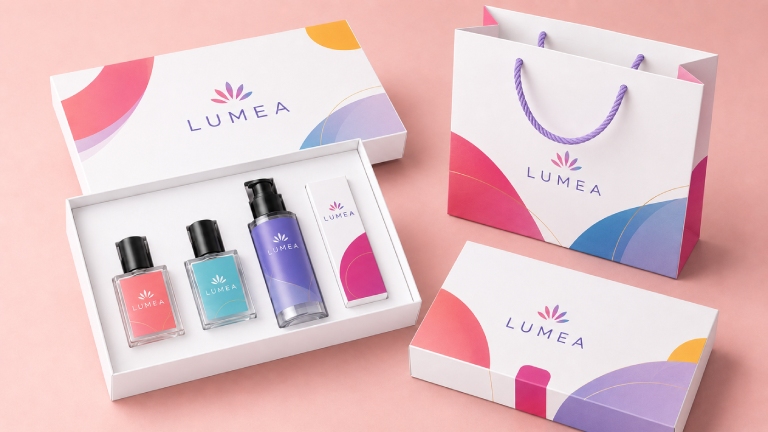
Rigid boxes are the preferred choice for premium gift collections. Made from thick grayboard wrapped in printed or specialty paper, they provide excellent structural strength and a substantial, high-quality feel. Their durable construction protects and presents multiple products beautifully, while supporting custom inserts, magnetic closures, ribbons, and premium finishes. Customers often keep and reuse rigid boxes, extending brand visibility well beyond the initial unboxing. Within rigid packaging, closure style shapes the unboxing experience. Magnetic closure boxes offer a sleek presentation and satisfying snap, while two-piece boxes create a classic lift-off-lid reveal.
Folding Cartons for Lightweight Retail Sets:
Folding cartons are well suited to lightweight gift sets and larger production runs. They support high-quality printing, foil stamping, embossing, and soft-touch lamination, and ship flat for efficient storage and transportation. A custom insert keeps multiple products neatly arranged, while an optional window cut-out adds shelf visibility for soaps, chocolates, cosmetics, and other visually appealing products.
Corrugated Mailers for Shipping and Presentation:
Corrugated mailer boxes are ideal for shipping and presenting heavy, fragile, or direct-to-consumer gift sets. Mailer boxes protect glassware, bottles, and other breakable products during shipping, while custom printing and finishes create a gift-ready presentation. Mailer-style design also combines the gift box and shipping box into a single format, reducing the number of packaging components required for e-commerce orders.
|
Box format |
Best suited to |
Key benefit |
Relative cost |
Relative lead time |
|---|---|---|---|---|
|
Magnetic rigid box |
Jewelry, fragrances, cosmetics, and luxury collections |
Premium presentation with a refined opening experience |
Highest |
Longest |
|
Two-piece rigid box |
Traditional gift collections and premium product sets |
Classic lift-off-lid reveal |
Highest |
Longest |
|
Folding carton |
Lightweight gift sets and larger production runs |
High-quality printing with efficient flat storage |
Lowest |
Shortest |
|
Window folding carton |
Soaps, chocolates, cosmetics, and visually appealing products |
In-box product visibility |
Lowest to moderate |
Short to moderate |
|
Corrugated mailer box |
Heavy, fragile, or direct-to-consumer gift sets |
Presentation and shipping in one box |
Moderate |
Moderate |
Cost and lead time are shown relative to one another for comparable sizes, quantities, and finishes. Actual figures depend on dimensions, order volume, materials, and finishing.
How Custom Inserts Keep Every Product in Place
The insert determines whether a gift set arrives securely arranged and ready to present. A properly designed packaging insert reduces product movement, prevents damage, and preserves the intended unboxing experience.
Packaging inserts come in several materials, each suited to different weights and price points. Paperboard inserts are cut and folded to create compartments for lighter products and can support an all-paper packaging construction where compatible materials and finishes are used. Corrugated inserts and partitions provide greater strength for heavier or fragile contents, and they are the practical choice when bottles or jars need to be kept from knocking together. Fence partitions are the traditional solution for sets of similar upright items such as candles, bottles, or glass jars, since they create a grid of cells that holds each piece separately. Foam inserts, usually EVA or polyethylene, are precision-cut to the shape of each product. They provide a secure fit and premium presentation, making them particularly suitable for electronics, fragrances, glass products, and other high-value items.
Regardless of material, the insert must fit each product correctly. Cavities that are too tight slow assembly and make products difficult to remove, while loose cavities allow movement during shipping. Test a physical sample with the actual products before production, as dimensions alone may not account for shape, closures, labels, or manufacturing tolerances. If products will change between seasons or set configurations, plan for this early. A flexible insert may accommodate multiple products and reduce the need for separate insert designs.
Outer Packaging: How to Protect a Holiday Gift Set During Shipping
Shipping protection should be considered from the beginning of the gift set project. A presentation box is not always designed for direct shipping, so the complete set may require an additional corrugated shipping box to protect its surfaces, corners, and contents during transit. This option works especially well when a rigid box, folding carton, or other presentation package must arrive without shipping labels or handling marks.
Alternatively, a custom-printed corrugated mailer box can combine the shipping container and presentation packaging into a single format. Interior printing creates a branded reveal, while a fitted insert keeps the products organized. Fragile items can receive additional support from corrugated inserts, paper cushioning, honeycomb wrap, or molded pulp.
Whichever format you choose, size it around the packed gift set and the cushioning it requires. Because carriers may charge based on the greater of actual or dimensional weight, avoid unnecessary empty space while maintaining sufficient protection.
When to Add a Custom Shopping Bag
Not every holiday gift set is delivered by courier. For retail purchases, in-store pickup, pop-up events, corporate gifting, and promotional distribution, a shopping bag provides a convenient and polished way to carry the complete set. A custom-printed shopping bag extends brand visibility beyond the store or event as customers carry the packaging in public.
The shopping bag should be sized according to the gift box rather than selected separately. A close fit keeps the box upright and gives the complete package a more intentional appearance. Heavier paper material helps the bag maintain its shape, while reinforced turn-tops and base boards provide additional support for larger or heavier sets. Rope and ribbon handles can further enhance comfort and create a premium appearance.
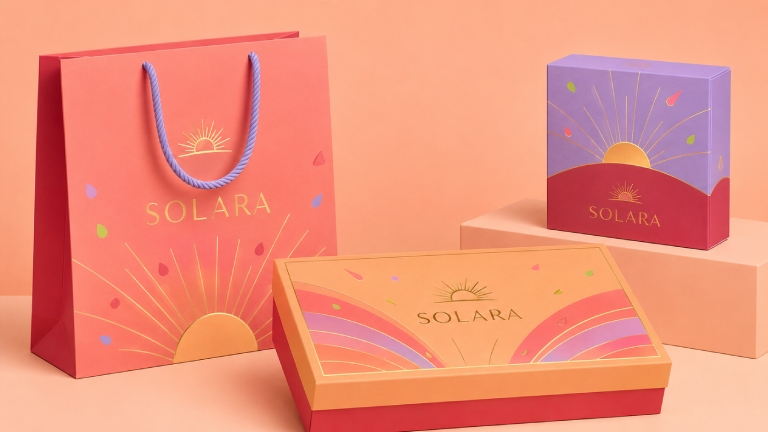
For a coordinated holiday collection, align the bag with the gift box by using consistent colors, logos, artwork, and finishes. A rigid box with matte lamination, foil stamping, or ribbon details can be paired with a shopping bag featuring the same visual elements, creating a complete and recognizable gift presentation.
Planning Your Holiday Gift-Set Packaging
Gift sets comprise several components that must arrive together, including the box, insert, corrugated mailer, and shopping bag. Each follows its own approval and production schedule, and the slowest one sets the date for the whole project. Finalizing product dimensions, quantities, packaging styles, artwork, and delivery requirements early gives every component time to be sampled, approved, and produced without compressing the schedule at the end.
Ready to begin? Send us the dimensions, weight, and photographs of each product, along with your required quantity and delivery date. We’ll help you develop a coordinated gift-set packaging solution and provide a free dieline, design support, and quote.
Holiday Gift-Set Packaging FAQs
Q: Do I need a separate shipping box for a gift set?
A: Usually yes, if the gift box is a presentation box. Rigid boxes and cartons with premium finishes are built to look good on arrival, not to absorb handling, and a shipping label applied directly to the lid removes the impression you paid for. Placing the gift box inside a corrugated mailer or shipping box protects both the surface and the products. The exception is a custom-printed corrugated mailer designed to do both jobs, which arrives as the shipping box and opens as the gift box.
Q: What insert material should I use for a gift set?
A: Choose the insert according to product weight, fragility, presentation, and material preferences. Paperboard works well for lighter items, corrugated adds strength for bottles and jars, and precision-cut foam provides a secure fit for high-value products.
Q: Why are rigid boxes popular for holiday gift sets?
A: Rigid boxes provide a substantial feel, strong product presentation, and a memorable unboxing experience. They also support fitted inserts, magnetic closures, ribbons, specialty papers, and premium finishes, making them well suited to luxury and limited-edition collections.
Q: How much space should I leave around a gift box inside the shipping box?
A: Choose the shipping box based on the cushioning required. Start with half an inch to an inch around the gift box, adjusting for its weight and fragility. Test the packed set before production and avoid excess space, as carriers may charge by actual or dimensional weight, whichever is greater.
Q: Can one insert work for multiple versions of a set?
A: Sometimes. If you plan for it during the design stage, a single insert can often accommodate a swapped product or a second configuration. Planning this upfront may reduce the need for a separate insert design and additional tooling.
Packaging Design & Printing Services
Packagingblue offers customized commercial printing solutions to meet your business needs. Our expert team delivers top-notch design and printing services that exceed expectations. Contact us today for a free consultation.